Scones look rustic. The cost is not.
Butter-heavy dough, cream, and breakage make scones one of the easiest bakery items to underprice.
This guide shows the math for U.S. scone shops and how to protect margin in retail and wholesale.
Start Here: The Numbers to Check
- This guide is for U.S. bakeries, cafes, and wholesale kitchens that sell scones and need prices that survive butter-heavy dough and breakage.
- The first numbers to check are butter cost, cream cost, finished portion weight, add-ins, packaging, and sellable yield after cracked pieces.
- Start with
Cost per scone = batch cost / sellable scones, then useprice floor = cost per scone / target food cost %for retail and wholesale quotes. - The examples below price a 16-scone batch, compare classic and savory add-ins, and show why wholesale cannot be a blind discount.
- Today, weigh your best-selling scone before baking and after baking, then recalculate one retail price and one wholesale case price.
Why Scone Costing Is Tricky
-
Butter is the main cost. A 10% butter increase can wipe out the week.
-
Portioning is inconsistent. Hand-cut wedges drift by weight.
-
Breakage is real. Cracked scones reduce sellable yield.
-
Add-ins are expensive. Cheese and nuts add more cost than sugar.
Target Food Cost % (U.S. Benchmarks)
| Scone type | Typical target | Notes |
|---|---|---|
| Classic (plain, vanilla) | 22-30% | Portion weight matters most |
| Premium (berry, nut) | 26-33% | Price add-ins directly |
| Savory (cheddar, bacon) | 28-35% | Higher ingredient cost |
If you sell wholesale, keep the retail target tight.
Base Cost Formula
Cost per scone = Total batch cost / Sellable scones
Sellable scones = Batch yield x (1 - loss rate)
Use a separate waste rate for day-end leftovers and wholesale returns.
Example Batch (16 Scones)
Replace with your own prices.
| Item | Qty | Unit cost | Line cost |
|---|---|---|---|
| Flour | 2.0 lb | $0.70/lb | $1.40 |
| Sugar | 0.5 lb | $0.90/lb | $0.45 |
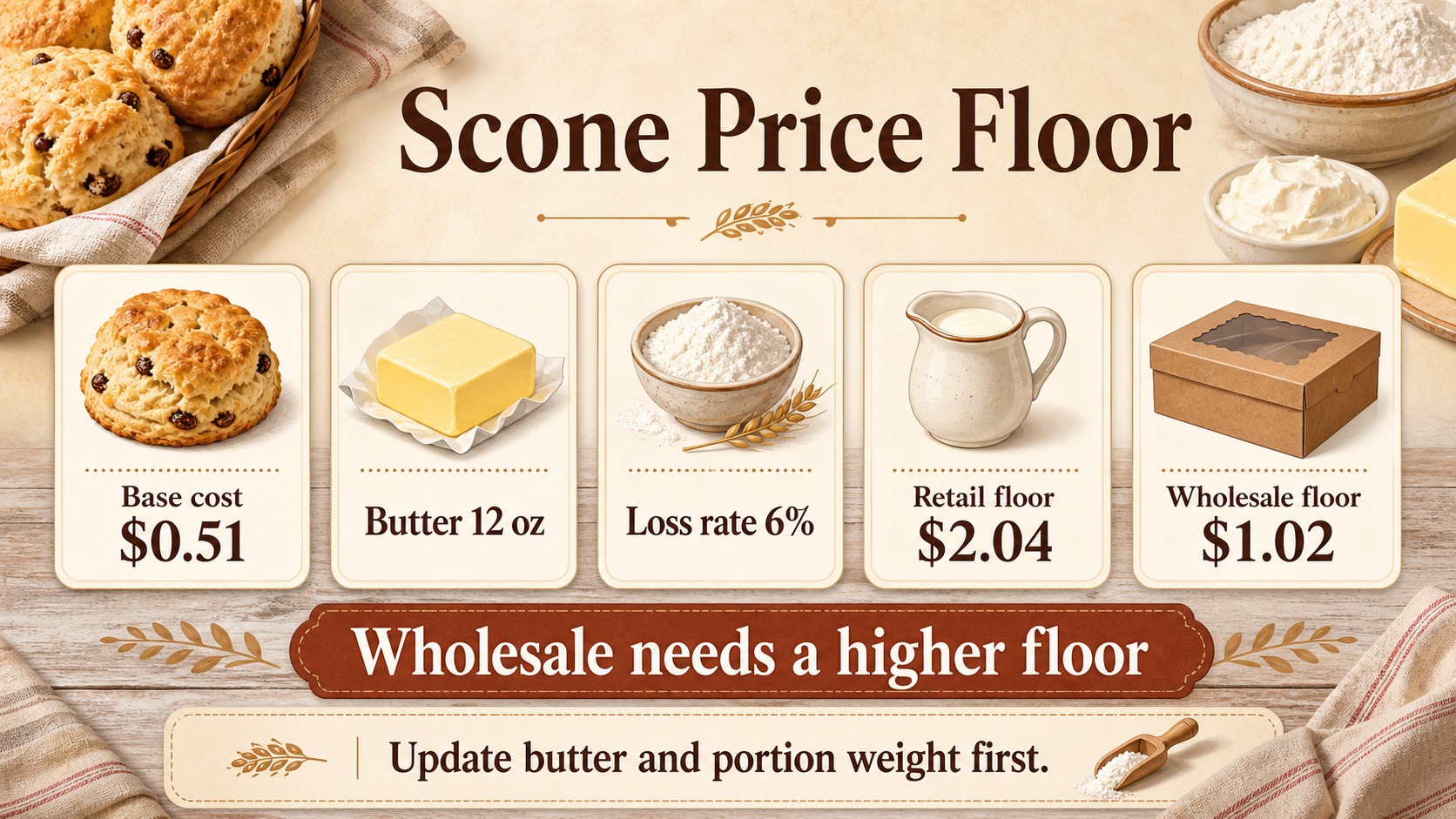
| Butter | 12 oz | $0.28/oz | $3.36 |
| Cream | 10 oz | $0.18/oz | $1.80 |
| Eggs | 2 ea | $0.25/egg | $0.50 |
| Baking powder + salt | - | - | $0.20 |
| Base batch cost | - | - | $7.71 |
Yield: 16 scones Loss rate: 6%
Sellable scones = 16 x 0.94 = 15.04
Base cost per scone = $7.71 / 15.04 = $0.51
Portion Weight Control
Pick a target weight (ex: 3.2 oz). Weigh the first pan every shift.
A +0.3 oz oversize scone adds 9% to cost.
Add-In Cost Table
| Add-in | Portion | Unit cost | Add-on cost |
|---|---|---|---|
| Dried cranberries | 0.7 oz | $0.32/oz | $0.22 |
| Pecans | 0.6 oz | $0.55/oz | $0.33 |
| Cheddar | 0.8 oz | $0.45/oz | $0.36 |
Add-ins can double the base cost. Price them as a premium line.
Retail vs Wholesale Pricing
Retail pricing protects margin. Wholesale protects volume.
A simple structure:
Wholesale price = Cost per scone x 1.8 to 2.2
Retail price = Cost per scone x 3.2 to 3.8
Use the lower end only if volume is guaranteed.
U.S. Price Outlook (Why Repricing Matters)
The BLS reported food-away-from-home prices up 4.1% over the 12 months ending December 2025, while food-at-home rose 2.4%.
USDA projects food-away-from-home prices up 4.6% in 2026. Butter and cream move fast, so review scone pricing quarterly.
Sources:
- https://www.bls.gov/opub/ted/2026/consumer-price-index-2025-in-review.htm
- https://www.ers.usda.gov/data-products/food-price-outlook/summary-findings/
Scone Pricing Checklist
- Set a target portion weight and document it
- Price savory scones higher than sweet
- Track breakage as a loss rate
- Separate wholesale pricing from retail
- Review butter and cream costs monthly
Do This Now
- Standardize all portion sizes in grams or ounces
- Calculate food cost for your top 5 menu items
- Set up a weekly price check for key ingredients
- Document your current yield percentages
- Create a pricing review calendar for the next 12 months
Related Guides
Want precise costs without spreadsheets? Start with KitchenCost.