
A 10-piece bone-in wing order can cost about $5.38 in this worked example before labor and overhead. At a 30% food cost target, that creates a $17.93 menu price floor:
$5.38 total order cost / 30% target food cost = $17.93 menu price floorUse this chicken wing cost calculator workflow when you need to price 8-piece, 10-piece, 12-piece, boneless, combo, delivery, or game-day wing orders from your own invoices.
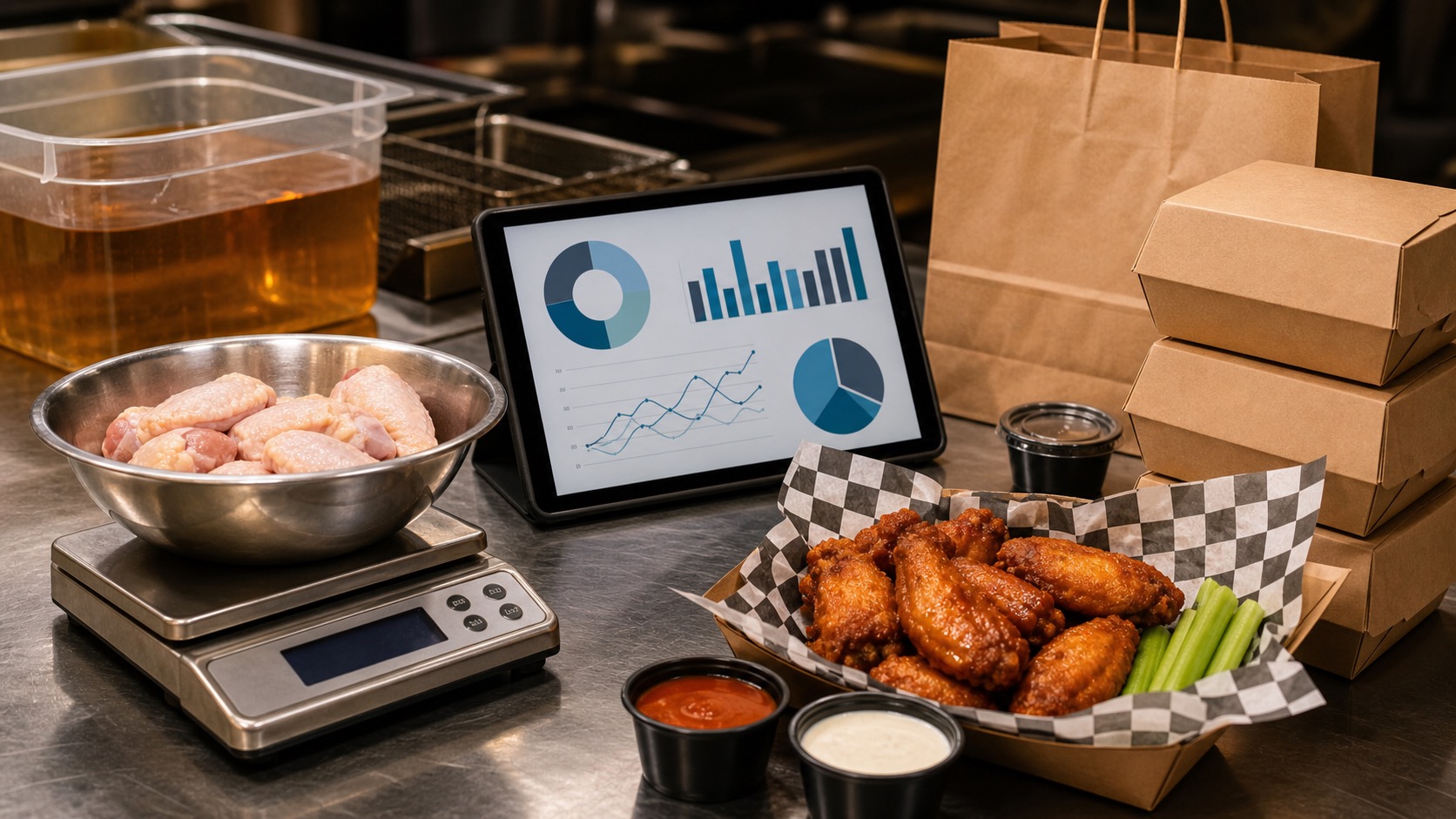
Start Here: The Numbers to Check
- This guide is for wing shops and bars pricing 6-piece, 10-piece, and party orders without letting sauce, dips, and oil disappear from the math.
- The first numbers to check are raw wing cost, cooked yield, sauce, ranch or blue cheese, oil, packaging, and promo discounts.
- Start with
order cost = wings + sauce + dips + oil + packaging, then divide by your target food cost to find the price floor. - The examples below focus on a 10-piece order and a 50 lb case check.
- Today, recalculate your most common wing order with the actual dip and sauce portions included.
The Wing Cost Formula
Wing order cost =
  (raw wing weight x invoice price per lb)
  + breading or flour
  + oil absorption
  + sauce
  + dip and garnish
  + packaging
  + expected waste

Menu price floor = wing order cost / target food cost %
The formula is simple. The margin leaks happen in portion weight, sauce pour, extra ranch cups, and delivery packaging.
10-Piece Bone-In Wing Example
This is a sample calculation, not a national average. Replace every unit cost with your supplier invoice.
| Component | Portion | Unit cost | Line cost |
|---|---|---|---|
| Bone-in wings | 1.2 lb | $3.00/lb | $3.60 |
| Flour or light breading | 2 oz | $0.03/oz | $0.06 |
| Fry oil absorption | 1 order | estimate | $0.20 |
| Buffalo sauce | 1 order | butter + hot sauce | $0.57 |
| Ranch or blue cheese + celery | 1 set | estimate | $0.50 |
| Takeout packaging | 1 set | estimate | $0.45 |
| Total order cost | $5.38 |
Menu Price Floor
| Target food cost | Minimum menu price |
|---|---|
| 28% | $19.21 |
| 30% | $17.93 |
| 32% | $16.81 |
| 35% | $15.37 |
If your market will not accept the price floor, do not simply “hope volume makes it up.” Adjust portion size, sauce standard, included dips, combo structure, or channel pricing.
50 lb Case Check
Wing operators should also sanity-check by case. Suppose a 50 lb case costs $150.
$150 / 50 lb = $3.00 per lb
50 lb / 1.2 lb per 10-piece order = 41.7 theoretical orders
If normal handling, size variation, staff meals, mistakes, and waste mean you only sell 40 orders from the case:
$150 / 40 sellable orders = $3.75 raw wing cost per orderThat is already $0.15 higher than the simple 1.2 lb calculation. Case checks catch losses that a per-order recipe sheet can miss.
Portion Standards to Lock In
| Standard | Why it matters |
|---|---|
| Raw wing weight per order | The biggest cost driver |
| Wing count by size | 8, 10, and 12-piece orders need separate standards |
| Sauce ounces | Heavy pours can erase margin |
| Included dip cups | One extra cup per order becomes a real cost |
| Celery, carrots, garnish | Small costs become high-volume costs |
| Packaging by channel | Dine-in, takeout, and delivery do not cost the same |
Write these standards where staff can see them. A profitable 10-piece order on paper becomes unprofitable if the line regularly serves 1.4 lb instead of 1.2 lb.
Sauce and Dip Pricing
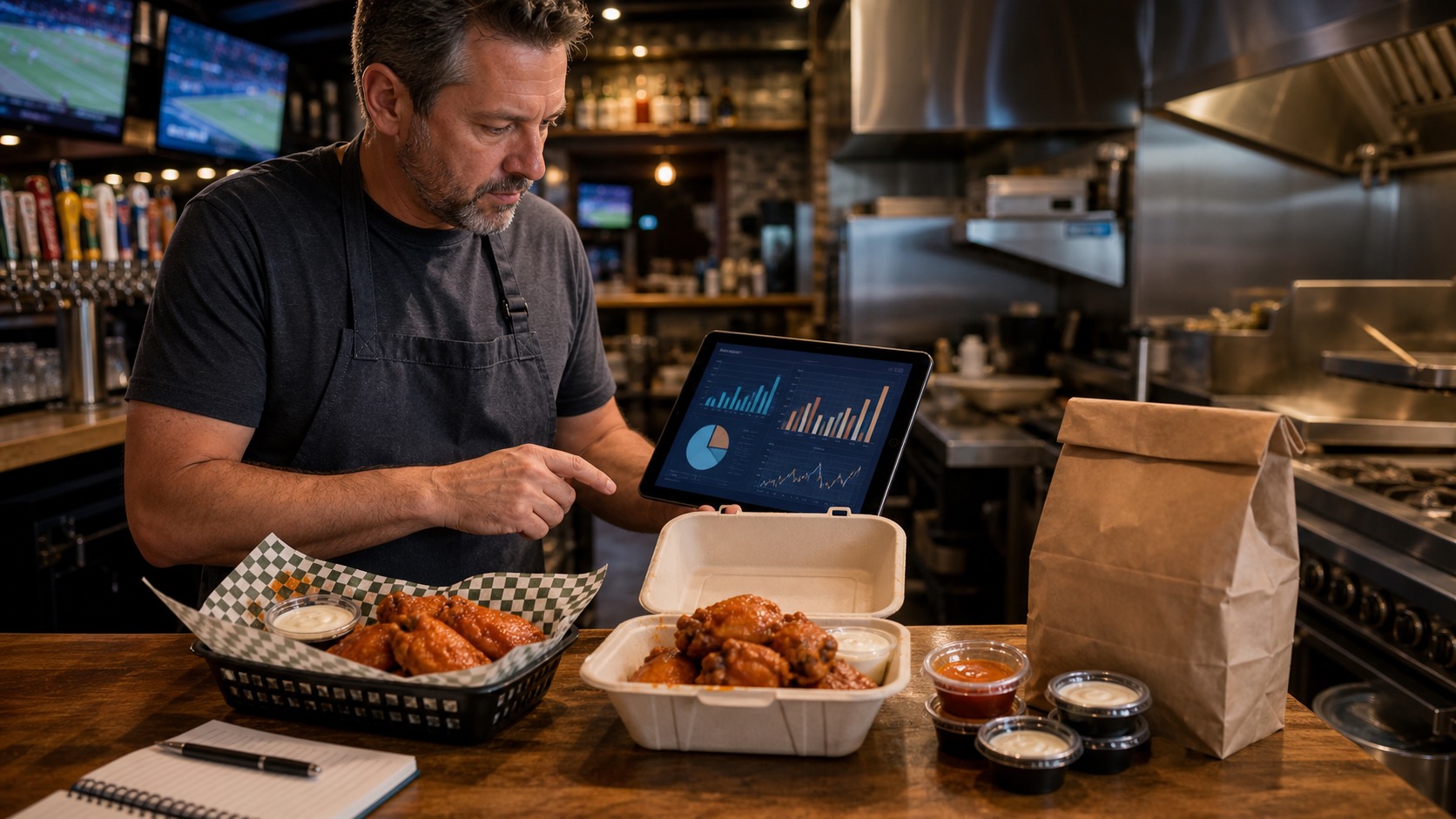
Sauce and dips should be priced like ingredients, not treated as free goodwill.
Extra sauce price = sauce cost / target food cost %
Extra dip price = dip cost / target food cost %
Example:
| Add-on | Cost | 30% food cost price floor |
|---|---|---|
| Extra ranch cup | $0.35 | $1.17 |
| Premium garlic parmesan sauce | $0.55 | $1.83 |
| Extra celery + dip | $0.60 | $2.00 |
Round for menu clarity, but do not ignore the math. Customers are used to paying for premium sauces and extra dips when the menu makes the choice clear.
Bone-In vs Boneless Wings
Bone-in and boneless wings should usually be separate menu items in the cost sheet.
| Item | Cost from | Main risk |
|---|---|---|
| Bone-in wings | raw wing lb | size variation, bone yield, over-portioning |
| Boneless wings | chicken meat ounces | breading, fry loss, sauce absorption |
| Cauliflower wings | vegetable weight + breading | prep labor, fry oil, sauce |
Boneless can look cheaper or more expensive depending on meat price, breading, and portion size. Do not assume the margin is better until you cost the finished order.
Game-Day Price Guardrail
Chicken wings can move quickly in cost, so build a trigger into your pricing review.
| Invoice change | What to check |
|---|---|
| +5% | Recalculate top wing sizes, but do not rush a menu change |
| +10% | Check price floor and combo discounts |
| +15% or more | Consider temporary feature pricing, sauce add-ons, or a menu price update |
Use public chicken price indexes only as a sanity check. Your supplier invoice is the price that decides margin.
Delivery and Combo Orders
Delivery wings need their own price because the order often includes more cost:
- Larger packaging
- More sauce cups and lids
- Platform commission or marketplace fees
- Refund risk for soggy or delayed orders
- Combo discounts with fries or drinks
For delivery menus, calculate the full channel cost before copying dine-in wing prices. Start with the US Delivery App Pricing Guide if platform fees are part of the sale.
Common Wing Pricing Mistakes
Pricing from menu count instead of raw weight
“10 pieces” is a guest-facing promise. Costing should still use raw weight. If the supplier ships larger wings, your count stays the same but your cost rises.
Including unlimited dips
Unlimited ranch sounds small until a busy night turns it into cases of dressing and portion cups. Include one dip, then price extras clearly.
Averaging bone-in, boneless, and combos
Each SKU needs its own cost. A profitable bone-in wing price can hide an unprofitable combo basket.
Forgetting waste and staff mistakes
Dropped wings, remake orders, overcooked batches, and staff meals should not be ignored. Add a small expected waste allowance or run a weekly case reconciliation.
This Week’s Wing Cost Audit
- Pull the latest wing invoice and calculate cost per lb
- Weigh the actual raw portion for 8-piece, 10-piece, and 12-piece orders
- Cost sauce, dip, garnish, and packaging as line items
- Recalculate menu price floors at 28%, 30%, 32%, and 35%
- Compare dine-in, takeout, and delivery wing margins separately
Related Guides
Want Wing Costs Done Automatically?
KitchenCost tracks proteins, sauces, dips, packaging, and yield in one place. Update one ingredient cost and every wing size updates with it.
Try KitchenCost.
Source Notes
The worked examples above are calculator examples, not current national averages. For external sanity checks, compare your invoice against public food price sources, then use your actual supplier cost for pricing.