
Fish and chips cost is not just the fish. A plate that looks profitable can become thin once you add chips, batter, oil absorption, sauce, packaging, and VAT-aware net price.
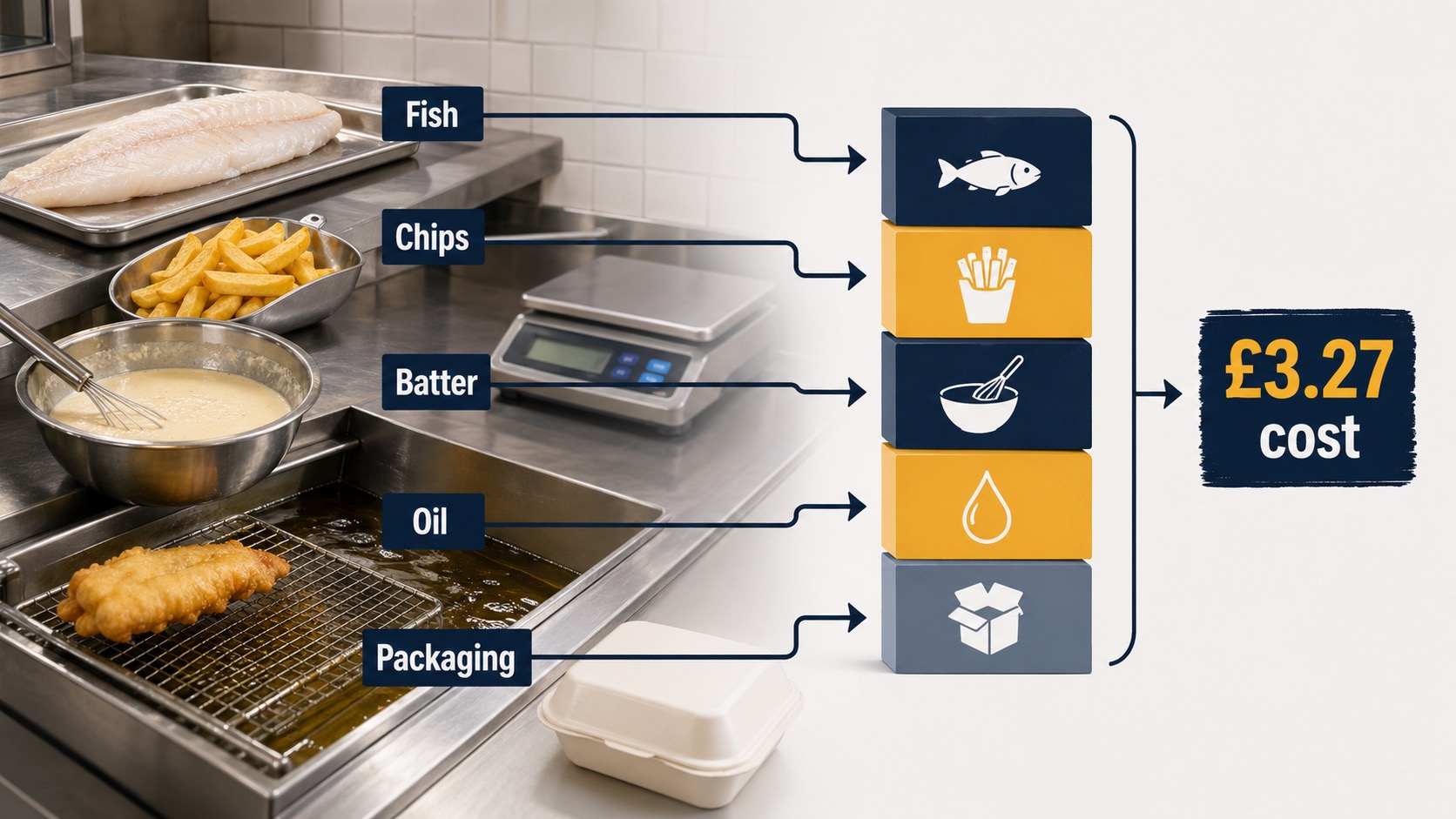
In this example, a cod supper costs £3.27 before labour and overhead. At a 30% food-cost target, the net price floor is £10.90. If the item is standard-rated and VAT applies at 20%, that implies a VAT-inclusive menu price near £13.08 before rounding.
Quick Answer
Use this formula:
Fish cost = Raw fish price per kg / Yield % x Portion kg
Chip cost = Raw potato price per kg / Yield % x Portion kg
Plate cost = Fish + chips + batter + oil + sides + packaging
Net price floor = Plate cost / Target food cost %
VAT-inclusive check = Net price x (1 + VAT rate, if applicable)
The decision rule: calculate food cost against net price, not the VAT-inclusive menu price.
Fish and Chips Cost Formula
Fish and chip shops have several cost lines that look small in isolation.
| Cost line | What to measure | Why it matters |
|---|---|---|
| Fish | Species, raw price, usable yield, portion grams | Main plate cost |
| Chips | Potato cost, yield, scoop grams | Portion drift is common |
| Batter | Batch cost divided by portions | Staff technique changes usage |
| Oil | Top-ups and absorption | Often hidden in overhead |
| Sauce and sides | Peas, curry sauce, tartar, lemon | Add-ons need their own price floor |
| Packaging | Box, liner, cup, bag | Takeaway-heavy shops cannot ignore it |
The biggest operational fix is not a spreadsheet. It is a posted portion standard at the pass.
Cod Supper Example
Assumptions:
| Input | Amount |
|---|---|
| Raw cod price | £9.20/kg |
| Fish yield | 88% |
| Cod portion | 200g |
| Potato price | £0.70/kg |
| Chip yield | 80% |
| Chips portion | 240g |
| Batter | £0.12 |
| Oil absorption | £0.07 |
| Mushy peas | £0.28 |
| Tartar sauce | £0.10 |
| Packaging | £0.40 |
Cost table:
| Item | Line cost |
|---|---|
| Cod | £2.09 |
| Chips | £0.21 |
| Batter | £0.12 |
| Oil | £0.07 |
| Mushy peas | £0.28 |
| Tartar sauce | £0.10 |
| Packaging | £0.40 |
| Total plate cost | £3.27 |
Net price floor:
£3.27 / 0.30 = £10.90If VAT applies at 20%:
£10.90 x 1.20 = £13.08That does not mean every shop should charge £13.08. It means you should not mistake a VAT-inclusive price for the amount your food cost is measured against.
VAT-Aware Price Check
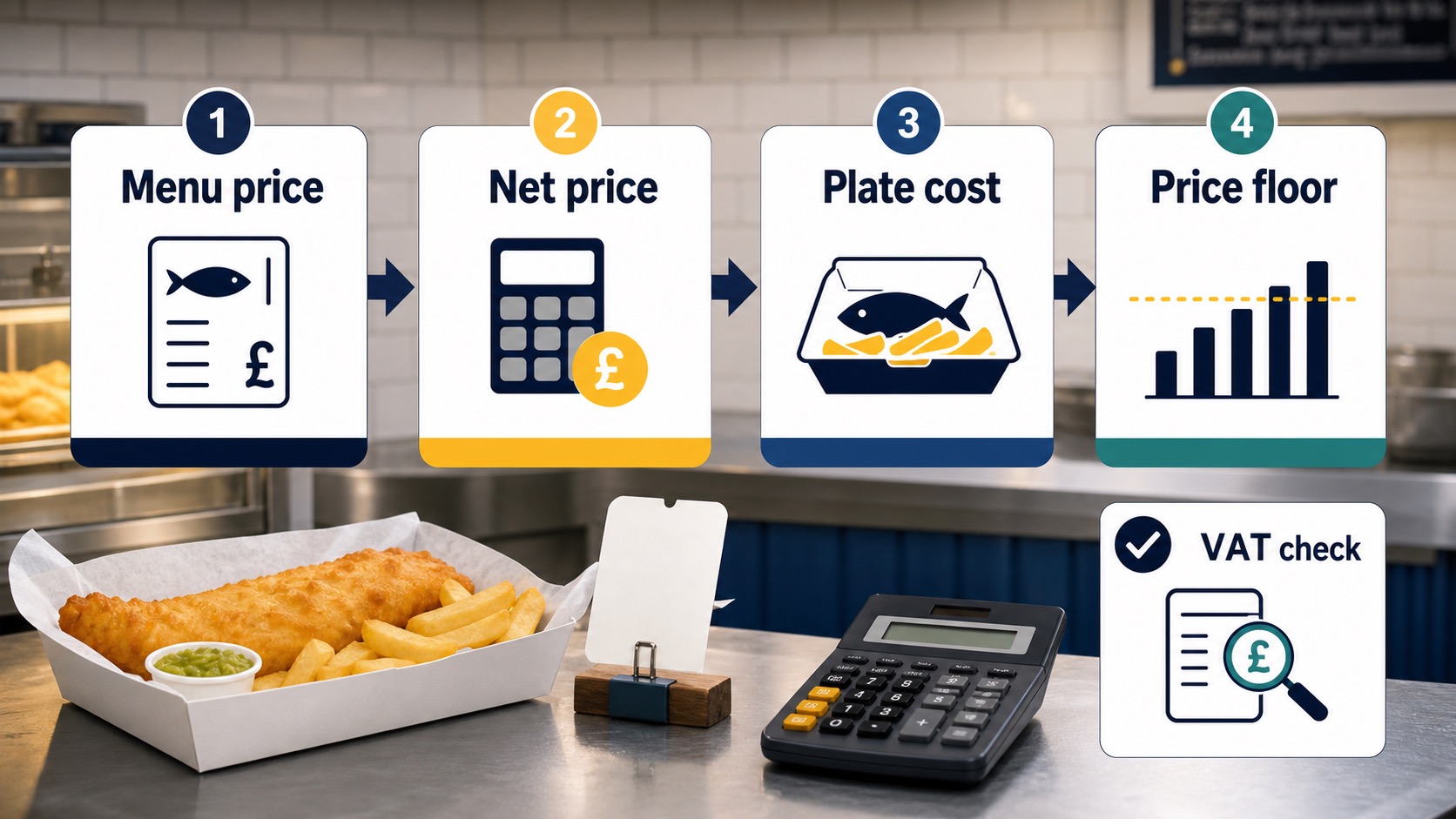
For margin checks, use:
Net price = Menu price / 1.20when the item is standard-rated at 20%.
UK VAT treatment can depend on whether food is hot takeaway, cold takeaway, catering, eat-in, or a specific product category. The safest SEO and business stance is to avoid giving blanket tax advice and point operators back to HMRC guidance.
Portion Drift: The Fastest Leak
If cod costs £2.09 for a 200g portion, then a 230g portion costs about:
£2.09 x 230 / 200 = £2.40That extra 30g adds £0.31 before chips, batter, oil, packaging, and labour. Across 100 suppers, that is £31 of extra fish cost from one portion habit.
Use this rule:
- Fish portions are weighed by grams.
- Chips are portioned with a standard scoop or target gram range.
- Batter is batched and logged by portions served.
- Oil top-ups are recorded weekly.
- Takeaway packaging is a plate cost line, not a general overhead.
Cod vs Haddock vs Specials
Cod, haddock, scampi, and fish cakes should not share one hidden average. Each product needs its own card.
| Item | Costing risk | Better control |
|---|---|---|
| Cod supper | High fish-cost sensitivity | Fixed gram target |
| Haddock supper | Supplier/spec variation | Separate yield and price card |
| Scampi | Portion count creep | Count and weigh |
| Fish cake | Batch yield | Divide batch cost by sellable units |
| Kids portion | Packaging share | Do not underprice because it is small |
Small portions often look cheap, but packaging and service time make them expensive relative to the plate.
Weekly Fish and Chips Cost Audit
Do this in 10 minutes:
- Update cod and haddock supplier prices.
- Weigh three fish portions and three chips portions.
- Log oil top-ups and batter batches.
- Recalculate plate cost for the top five sellers.
- Compare food cost against net price.
- Decide whether to adjust price, portion, bundle, or add-on placement.
This audit is especially important before weekends and holidays, when the shop is busy enough for small portion drift to become expensive.
Related Guides
- US Lent Fish Fry Pricing Guide
- UK Bakery Cost Calculator
- UK Pub Menu Pricing Guide
- UK Full English Breakfast Cost Guide
- Delivery App Pricing for Restaurants
- Recipe Costing Formula
Want Fish and Chips Cost Cards Done Faster?
KitchenCost lets you save fish yield, chips portion, batter, oil, sauce, packaging, and target food cost in one recipe card. When fish prices move, you update the ingredient and see the new price floor.
Try KitchenCost to make fish and chips pricing less dependent on guesswork.
Sources
Source Notes
The worked examples are model calculations for operators. Use your own invoices, yield tests, portion weights, and accountant or HMRC guidance before publishing VAT-sensitive prices.