
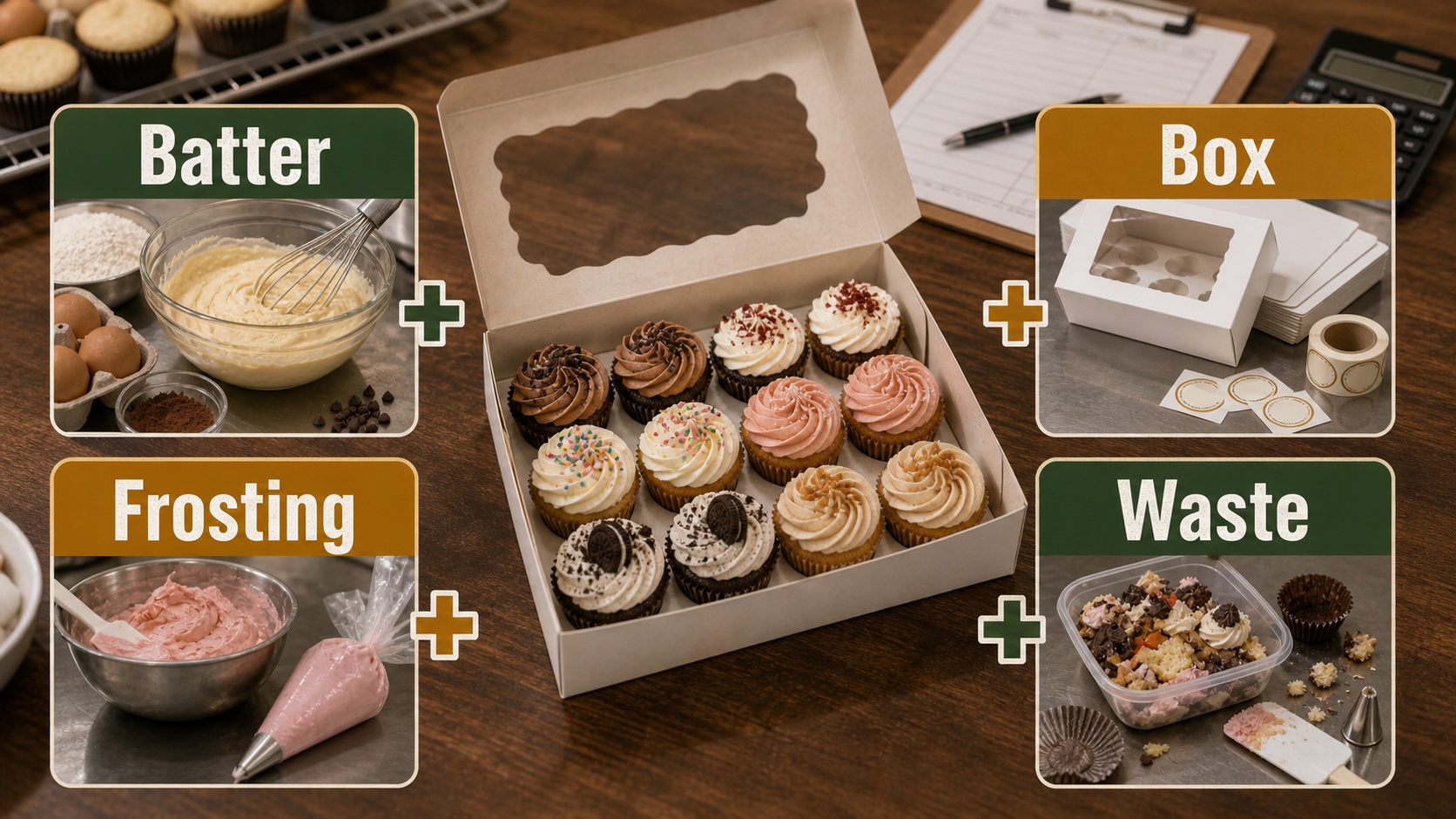
Cupcake cost is not just batter. A profitable cupcake price includes batter, frosting, liners, boxes, labels, custom toppings, waste, and the difference between singles, dozens, and large orders.
Use this cupcake cost calculator workflow to set price floors for retail singles, dozen boxes, and 100-cupcake custom orders.
Start Here: The Numbers to Check
- This guide is for cupcake bakeries pricing singles, dozens, custom toppings, and large event orders.
- The first numbers to check are batter yield, frosting weight, liners, boxes, toppings, labor time, and expected waste.
- Start with
cupcake cost = batter + frosting + topping + packaging + waste allowance, then build separate prices for singles and dozen boxes. - The examples below show base cupcakes, dozen pricing, and a 100-cupcake order.
- Today, calculate one cupcake flavor as a single and as a dozen before offering a bulk discount.
Cupcake Cost Formula
Cupcake cost = batter + frosting + liner + packaging + topping + waste allowance
Price floor = cupcake cost / target food cost %
For dozen boxes:
Dozen cost = (cupcake cost x 12) + dozen box + label + expected waste
Dozen price floor = dozen cost / target food cost %
Base Cupcake Example
Sample cost per cupcake:
| Cost bucket | Sample cost |
|---|---|
| Batter | $0.24 |
| Frosting | $0.28 |
| Liner | $0.04 |
| Packaging allocation | $0.12 |
| Expected waste allowance | $0.07 |
| Base cost per cupcake | $0.75 |
At a 30% target food cost:
$0.75 / 0.30 = $2.50 price floorIf your retail single is $3.50, there is room for labor and overhead. If it is $2.25, the item is underpriced before labor is considered.
Singles vs Dozens
| Format | What changes | Cost risk |
|---|---|---|
| Single cupcake | clamshell or display packaging | packaging can be high per unit |
| 4-pack | shared box | discount can be safe if box is efficient |
| Dozen box | lower packaging per cupcake | over-discounting |
| Custom dozen | toppings and labor | add-ons not priced separately |
Dozens should not automatically be cheap. They are efficient to pack, but they still contain 12 cupcakes, a box, and often more customer expectation.
100-Cupcake Order Example
Assume:
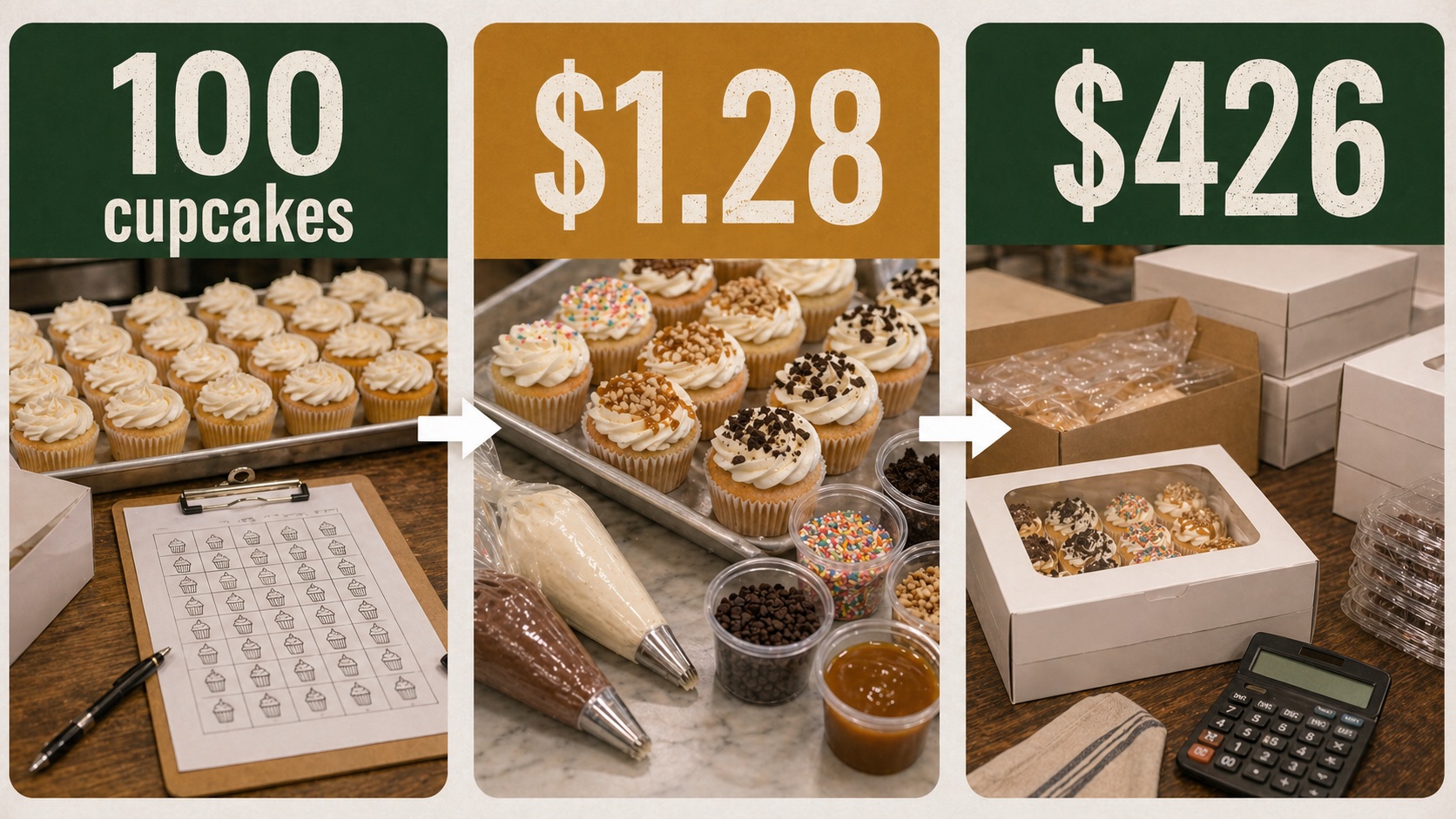
- Base cupcake cost: $0.75
- Custom topping cost: $0.35
- Bulk packaging allocation: $0.10
- Waste buffer: $0.08
Order cost per cupcake = $0.75 + $0.35 + $0.10 + $0.08 = $1.28
100 cupcakes x $1.28 = $128 total food and packaging cost
Price floor at 30% food cost = $128 / 0.30 = $426.67
That price floor still does not include delivery, setup, rush work, or detailed decoration labor. Add those separately.
Custom Toppings and Fillings
Common add-ons:
- Cream cheese frosting
- Fruit compote
- Filled centers
- Chocolate ganache
- Fondant toppers
- Edible flowers
- Cookie crumbles or candy
Use the add-on formula:
Add-on price = added cost / target food cost %If an edible flower and handling add $0.45 per cupcake:
$0.45 / 0.30 = $1.50 upchargeCharging $0.50 for that topping makes the order feel premium while the margin gets weaker.
Cupcake Pricing Checklist
- Separate batter and frosting costs.
- Add packaging by format: single, 4-pack, dozen, or event tray.
- Add premium toppings as line items.
- Include a waste buffer for custom colors and fragile decoration.
- Price large orders from the full order cost, not from a casual dozen discount.
Related Guides
- Baking Ingredient Cost Calculator - Flour, butter, eggs, and batch yield math
- US Cookie Shop Cost Guide - Portion size, mix-ins, and box pricing
- Recipe Costing Formula - Full recipe costing workflow
- US Restaurant Labor Cost Calculator - Add labor after ingredient cost
- US Restaurant Utility Cost Guide - Overhead costs outside food cost
KitchenCost helps cupcake bakeries update one ingredient price and recalculate singles, dozen boxes, and custom order costs.
Method Notes
This guide uses sample costs to show the calculation method. Replace sample batter, frosting, packaging, topping, and waste costs with your own production records.