
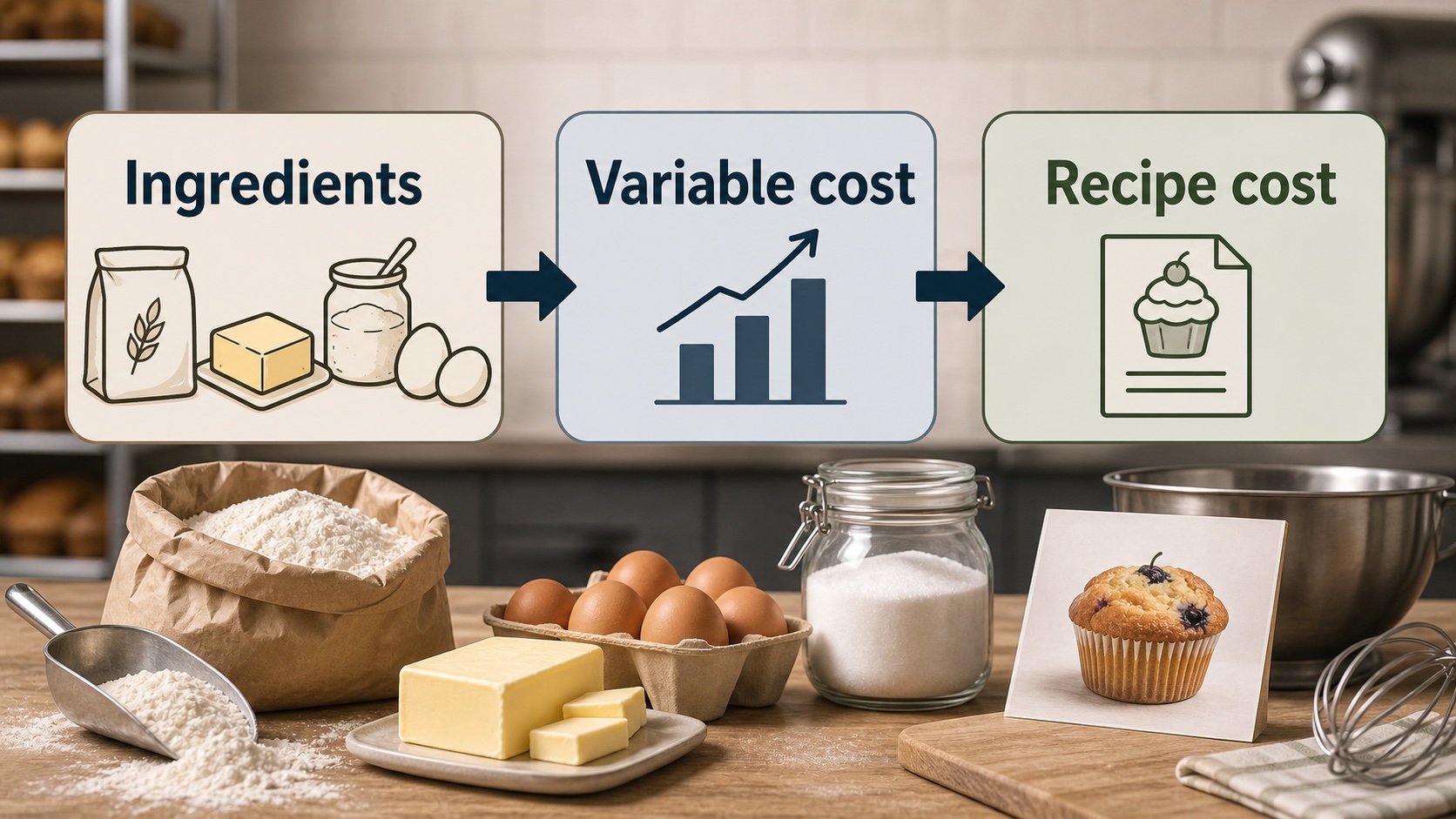
Flour, butter, sugar, and eggs are usually variable direct food costs. In a bakery or restaurant, they rise when you make more sellable items, and they belong in recipe costing, batch costing, and cost of goods sold.
The mistake is treating them like a vague monthly expense. A 50-pound bag of flour sits in storage, but the useful question is not “What did I spend on flour this month?” The better question is: how much flour cost went into this batch, this cookie, this loaf, or this cupcake?
Quick Classification
| Item | Cost type | Why |
|---|---|---|
| Flour | Variable direct food cost | More batches use more flour |
| Butter | Variable direct food cost | Usage changes with recipes and batch volume |
| Sugar | Variable direct food cost | Consumed directly in the finished product |
| Eggs | Variable direct food cost | Batch quantity changes with production |
| Packaging | Variable selling or packaging cost | Usually changes per item or per order |
| Rent | Fixed cost | Does not change with one more batch |
| Oven or mixer | Fixed asset / depreciation cost | Bought once, then allocated over time |
For most owner-operators, the practical rule is simple: if the cost goes into the item and increases when you sell more items, track it as a variable cost inside your recipe or batch model.
Why This Matters for Pricing
Cost classification sounds like accounting homework until the price is wrong.
If you only look at the grocery receipt, you know what you bought. You do not know what one muffin costs. You need to move from purchase cost to batch cost:
Ingredient used in batch x unit cost = ingredient cost in batch
Total batch cost / sellable units = cost per item
Example:
| Ingredient | Amount used | Unit cost | Batch cost |
|---|---|---|---|
| Flour | 2.0 lb | $0.70 / lb | $1.40 |
| Butter | 1.0 lb | $4.20 / lb | $4.20 |
| Sugar | 1.2 lb | $0.85 / lb | $1.02 |
| Eggs | 12 eggs | $0.28 each | $3.36 |
| Core ingredient cost | $9.98 |
If the batch makes 24 muffins, the core ingredient cost is:
$9.98 / 24 = $0.42 per muffinThat is not the full price. It is the first layer.
Variable Cost vs Fixed Cost
Ingredients are usually variable. Rent is usually fixed. Equipment is not exactly “free” just because it was purchased earlier.
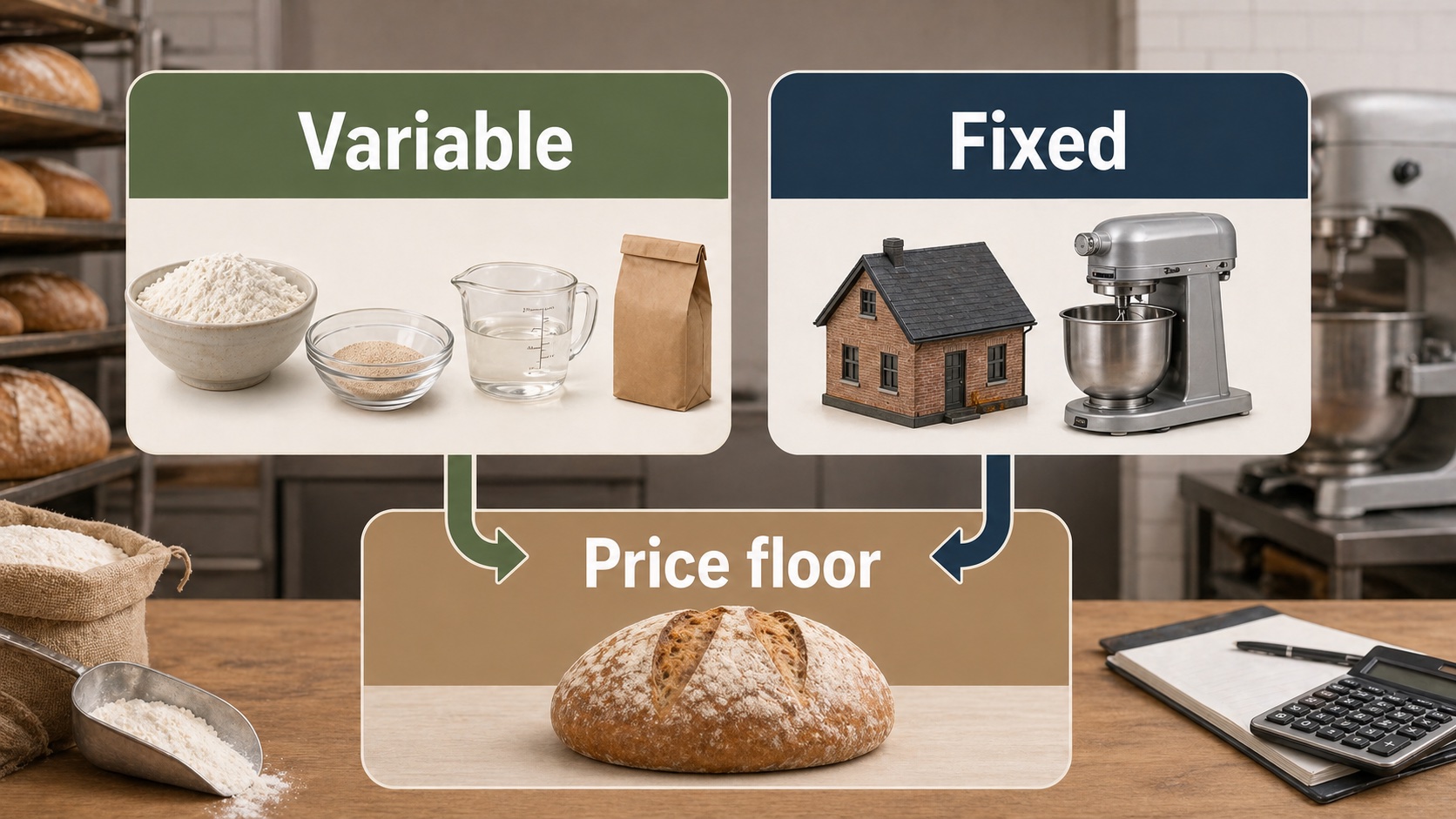
Use this working split:
| Cost | Common classification | Pricing treatment |
|---|---|---|
| Flour, butter, sugar, eggs | Variable direct food cost | Include in recipe cost |
| Fillings, toppings, garnish | Variable direct food cost | Include per item or per batch |
| Cupcake liners, boxes, labels | Variable packaging cost | Include per item or per order |
| Hourly prep labor | Variable or semi-variable labor | Include when pricing production work |
| Rent, insurance, software | Fixed overhead | Recover through margin and sales volume |
| Oven, mixer, display case | Fixed asset / depreciation | Allocate as monthly replacement cost |
The danger is leaving packaging, waste, or prep labor outside the formula. A cookie can look profitable at ingredient cost and still lose money after box cost, broken pieces, and labor time.
Direct Cost or COGS?
For a food business, flour, butter, sugar, and eggs usually count as direct materials. When those materials are used to make products that are sold, they flow into cost of goods sold.
In plain English:
- They are direct because they go into the product.
- They are variable because usage changes with production.
- They are food cost because they become part of the sold item.
- They are part of COGS when the finished item is sold.
If you buy eggs for staff meals or recipe testing, classify that usage separately. The same ingredient can have a different purpose depending on where it goes.
Owner Rule: Classify by Behavior, Then Price by Item
Do not stop at the accounting label. Use it to make a better price.
Start with this order:
- Convert each ingredient purchase price into a usable unit cost.
- Multiply the recipe amount by that unit cost.
- Add yield loss, waste, toppings, and packaging.
- Divide by sellable units.
- Set the price from the real cost per item, not the purchase receipt.
If you want the calculator version, use the Baking Ingredient Cost Calculator. If you need the full restaurant formula, start with Recipe Costing Formula.
Common Mistakes
| Mistake | Why it hurts |
|---|---|
| Treating a flour bag as one monthly expense | You cannot see cost per loaf or per muffin |
| Ignoring butter price changes | High-fat recipes can lose margin quickly |
| Counting eggs by “dozen” but recipes by each | Unit mismatch creates silent cost errors |
| Leaving packaging outside item cost | Boxed cookies and cupcakes get underpriced |
| Pricing from ingredient cost only | Labor, waste, and fixed overhead still need recovery |