Ramen looks simple from the guest side: broth, noodles, toppings, bowl.
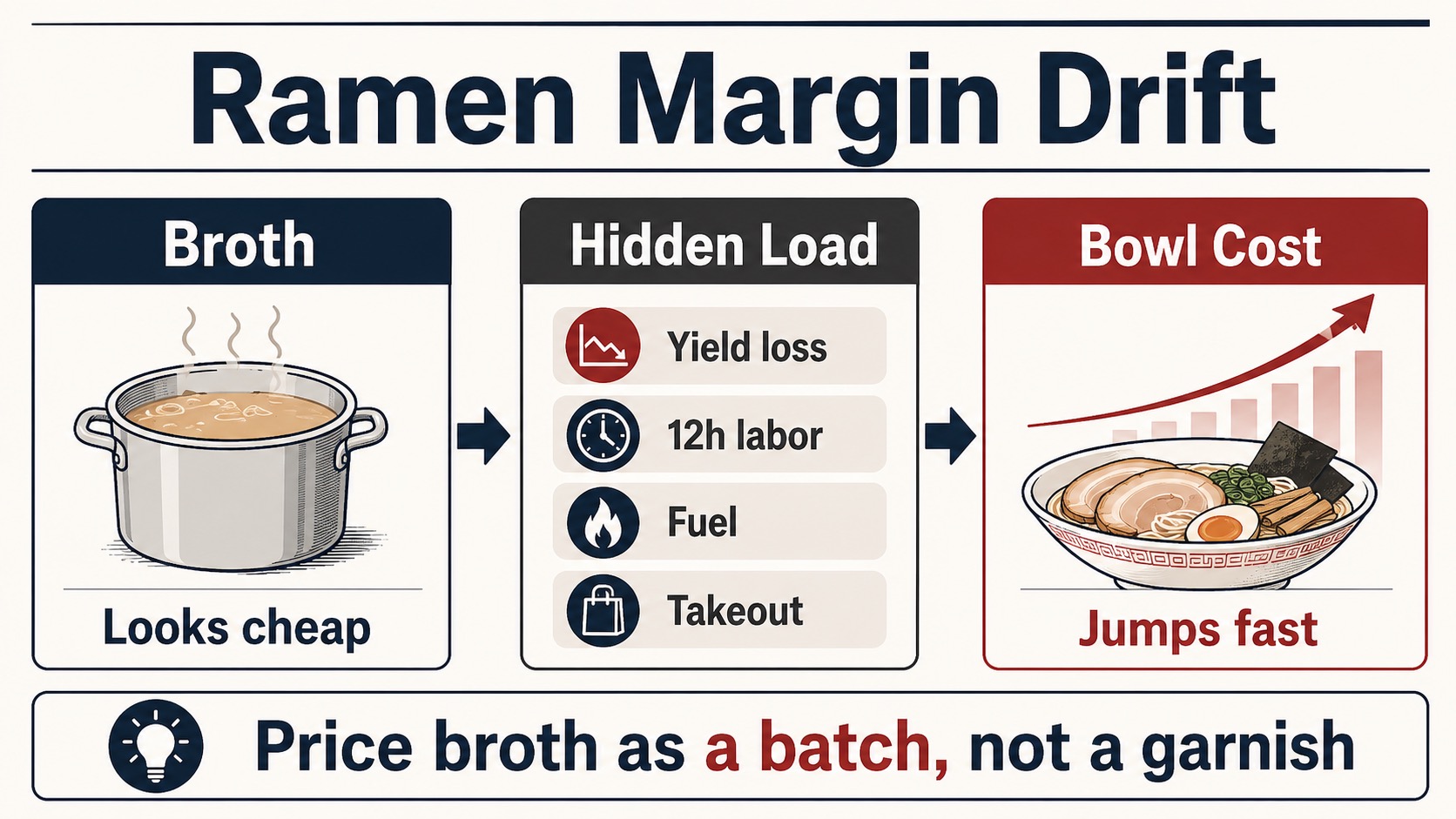
For the operator, the expensive part is not only the pork or noodles. It is the batch. A long-simmer broth loses yield, consumes labor and fuel, and then gets underpriced if the cost card treats it like a garnish.
The rule for ramen shops is direct: price broth as a batch, not as a background ingredient.
What Must Go Into Ramen Bowl Cost
| Cost bucket | Examples | Why it matters |
|---|---|---|
| Broth batch | Bones, aromatics, tare allocation, fuel, prep labor | Sets the floor for every bowl |
| Noodles | Portion weight, fresh vs dried, supplier changes | Small weight creep repeats all day |
| Protein | Chashu, egg, chicken, tofu | High visibility and high cost |
| Toppings | Nori, scallion, bamboo, oils | Easy to ignore, meaningful at volume |
| Takeout | Bowl, lid, bag, utensils | Changes channel profitability |
If the broth batch is wrong, every menu price downstream is wrong.
Core Formula
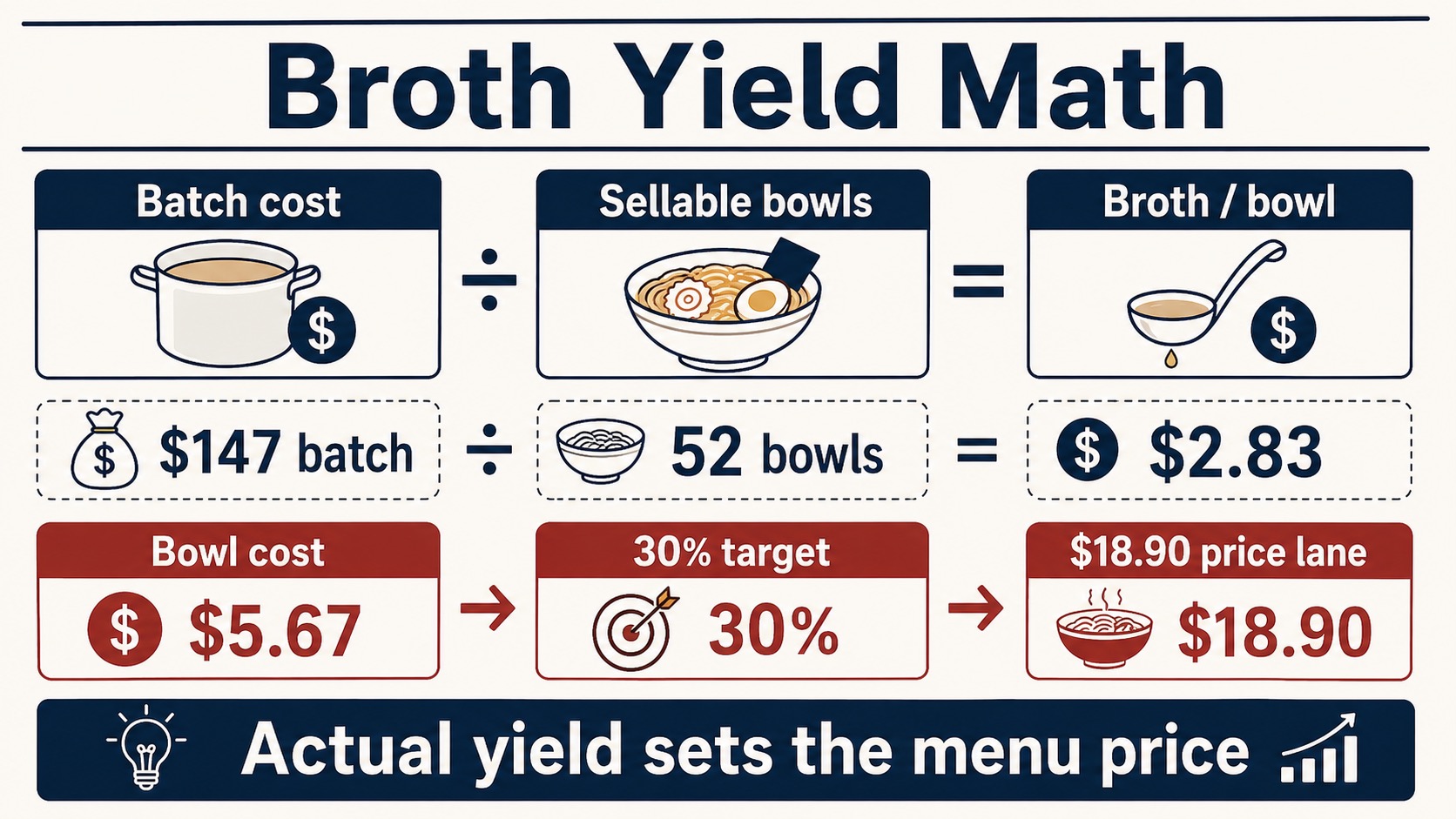
brothBatchCost = brothIngredients + fuel + brothPrepLabor

brothCostPerBowl = brothBatchCost / sellableBrothBowls

bowlCost = brothCostPerBowl + noodles + protein + toppings + disposables

menuPrice = bowlCost / targetCostRate
If sellable broth bowls is zero, the answer is not a price. It is a bad yield assumption.
Worked Example: Tonkotsu Bowl
Use this as a structure, then replace the numbers with your invoices and prep logs.
| Item | Cost |
|---|---|
| Bones and aromatics | $89 |
| Fuel allocation | $16 |
| Broth labor allocation | $42 |
| Broth batch cost | $147 |
| Sellable broth bowls | 52 |
| Broth cost per bowl | $2.83 |
Now build the full bowl:
| Component | Cost |
|---|---|
| Broth per bowl | $2.83 |
| Noodles | $0.68 |
| Chashu + half egg | $1.28 |
| Toppings and tare | $0.56 |
| Takeout/disposable allocation | $0.32 |
| Bowl cost | $5.67 |
At a 30% target cost rate:
menuPrice = 5.67 / 0.30 = $18.90That supports an $18.90 price lane for this build. If the local menu price is $16.95, the shop needs a tighter portion spec, cheaper build, paid add-ons, or a different target.
Where Ramen Shops Usually Lose Margin
1. Broth yield is assumed, not measured
Do not cost the batch from the recipe card alone. Use actual finished volume and actual sellable bowls from the last batch.
2. Chashu is sliced by eye
Protein variance is expensive and visible. A small over-slice repeated through the lunch rush changes the day’s contribution.
3. Eggs and toppings are treated as small
The half egg, oil, nori, scallions, bamboo, and tare can look small individually. Together, they can decide whether a bowl hits target.
4. Takeout uses dine-in pricing
Takeout ramen needs packaging that dine-in bowls do not. A separate takeout cost line is cleaner than hoping the average margin absorbs it.
Price Lanes Work Better Than One Blended Target
| Bowl type | Cost pressure | Pricing move |
|---|---|---|
| Shoyu/shio | Lighter broth | Keep as base lane |
| Tonkotsu | Heavy batch cost | Premium lane or tighter portion |
| Spicy/specialty | Oils and toppings | Add-on or specialty price |
| Takeout ramen | Packaging and quality control | Separate takeout price or packaging line |
KitchenCost can model those lanes separately, so the base bowl does not hide the real cost of a specialty bowl.
20-Minute Weekly Ramen Cost Loop
| Step | Action |
|---|---|
| 1 | Update pork, egg, noodle, and topping invoice costs |
| 2 | Enter actual broth batch cost and sellable bowls |
| 3 | Weigh noodles and chashu on the top 5 bowls |
| 4 | Compare dine-in and takeout contribution |
| 5 | Change one lever: price lane, portion spec, or add-on design |
Operator Rule
If the broth is not costed as a batch, the bowl price is probably too low. Start with yield, then add noodles, protein, toppings, and packaging.
Related Guides
Notes
- Cost examples are operating examples for ramen pricing. Replace them with your batch logs, invoice costs, and actual sellable yield.